In recent months, social media platforms—particularly WhatsApp—have been flooded with messages claiming that “Yippee Blog” offers free mobile recharges worth ₹599 or ₹719 for Jio, Airtel, Vi, and BSNL users. These messages promise 3 months of free data and unlimited calls, asking users to click on a link and follow simple steps to claim their reward. But before you get excited and share that link with your contacts, here’s the hard truth: Yippee Blog is not a legitimate recharge provider, and no telecom company has authorized any such offer.
What Is Yippee Blog?
Yippee Blog appears to be a generic blog or website that has gained viral attention through WhatsApp forwards and social media posts. The platform claims to partner with telecom companies to distribute free recharges, but there is no official connection between Yippee Blog and Jio, Airtel, Vi, or BSNL.
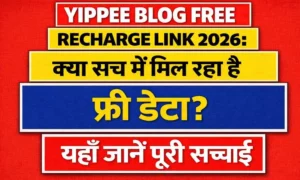
The website uses attractive headlines and fake loading animations to appear legitimate. However, upon closer inspection, several red flags become apparent:
-
No company registration details
-
No customer support contact information
-
Poor grammar and unprofessional design
-
No official announcements from any telecom provider
How the Yippee Blog Free Recharge Scam Works
Understanding the mechanics of this scam can help you recognize similar fraudulent schemes in the future. Here’s the typical process:
Step 1: Viral WhatsApp Message
You receive a message on WhatsApp, Facebook, or Instagram claiming that Yippee Blog is offering free recharges. The message urges immediate action, creating a sense of urgency.
Step 2: Clicking the Link
The link directs you to a website designed to look like an official recharge portal, complete with logos of major telecom companies.
Step 3: Information Collection
You are asked to provide:
-
Your mobile number
-
Your telecom operator (Jio, Airtel, Vi, BSNL)
-
Your state/circle
Step 4: Fake Processing Animation
After submitting your information, you see a loading animation that suggests your recharge is being processed. This is designed to build anticipation and make the process feel legitimate.
Step 5: The Trap – Sharing Requirement
Finally, the website informs you that to receive the free recharge, you must share the link with 10 WhatsApp groups or 20 friends . This is the biggest red flag—no legitimate company forces users to spam their contacts as a condition for receiving a service.
Step 6: Never-Ending Loop
Even after sharing the link, users never receive any recharge. Instead, they may be redirected to survey sites, asked to download suspicious apps, or simply shown more ads.
Why This Is a Dangerous Scam
The Yippee Blog free recharge offer is not just fake—it poses genuine risks to your digital security and privacy.
Data Theft
When you enter your mobile number on such websites, it gets added to scammers’ databases. This can lead to:
-
Increased spam calls and messages
-
Targeted phishing attempts
-
Your number being sold to telemarketers
According to cybersecurity experts, “If a service is being offered for free, understand that ‘you’ are the product, and your data is your price” .
Financial Fraud Risk
In more sophisticated versions of this scam, users may be asked to enter:
-
OTPs (One-Time Passwords)
-
Bank account details
-
UPI PINs
-
Aadhaar numbers
Never share OTPs or banking information on unknown websites. Scammers can use this information to drain your bank accounts or take out loans in your name .
Malware Installation
Some of these fraudulent websites attempt to install malware or spyware on your device in the background. This malicious software can:
-
Track your keystrokes (including passwords)
-
Access your contacts and messages
-
Monitor your banking transactions
-
Steal OTPs in real-time
Unwitting Participation in the Scam
By sharing the link with your contacts, you become part of the scam’s distribution network. You are unknowingly putting your friends and family at risk, especially elderly or less tech-savvy individuals who may trust the link because you shared it .
The Economics Behind the Scam
You might wonder—what do scammers gain if no money is directly taken? The answer lies in multiple revenue streams:
Ad Revenue Generation
Every time someone visits the Yippee Blog website, scammers earn advertising revenue. With thousands of people clicking the link daily, this can add up to significant earnings .
Lead Generation
The collected mobile numbers are valuable. Scammers can sell this data to other fraudsters or use it for future phishing campaigns.
Affiliate Marketing
Users may be tricked into downloading apps or completing surveys that generate commission for the scammers.
How to Identify Fake Free Recharge Offers
Learning to spot fraudulent schemes can protect you from future scams. Here are key warning signs:
Suspicious Domain Names
Legitimate telecom companies use official domains like jio.com, airtel.in, or myvi.in. Scam websites often use unusual extensions like .xyz, .top, .blog, or misspelled versions of real domains.
Spelling and Grammar Errors
Official communications from major companies are professionally written. Scam websites frequently contain spelling mistakes, grammatical errors, and awkward phrasing.
Sharing Requirements
No legitimate company requires you to share links with groups or friends to receive a promotion. This is the clearest indicator of a scam.
Too Good to Be True
If an offer promises “3 months of free recharge” with no conditions, it’s almost certainly fake. Telecom companies are businesses—they don’t give away expensive plans for free without meaningful engagement requirements.
Request for OTP or Sensitive Information
Legitimate recharge offers never ask for OTPs, passwords, or banking details. Your mobile number alone is sufficient for any genuine promotion.
What to Do If You Have Already Clicked the Link
If you’ve already shared your information on Yippee Blog or similar websites, take these steps immediately:
1. Change Important Passwords
Update passwords for your email, banking, UPI apps, and social media accounts.
2. Monitor Bank Accounts
Closely check your bank statements and transaction history for any unauthorized activity.
3. Enable Two-Factor Authentication
Add an extra layer of security to all important accounts.
4. Inform Your Bank
If you suspect any compromise, contact your bank immediately and consider temporarily blocking your cards.
5. Report to Cyber Crime Authorities
File a complaint on the official government cyber crime portal (cybercrime.gov.in). Quick action can minimize potential damage .
Legitimate Ways to Get Free Data from Indian Telecom Operators
While the Yippee Blog offer is fake, Indian telecom operators do offer legitimate ways to earn free data through their official apps:
Jio (MyJio App)
The MyJio app features an “Engage” section where users can:
-
Play small games to earn data rewards
-
Participate in quizzes and contests
-
Complete simple tasks for 1GB to 2GB of free data
Airtel (Airtel Thanks App)
The Airtel Thanks app offers:
-
A “Rewards” section with free data coupons
-
Partner offers from brands like Amazon, Zomato, and Swiggy
-
Loyalty points that can be redeemed for data
Vi (Vi App)
Vi provides:
-
Night data offers (unlimited data from 12 AM to 6 AM) on select plans
-
Weekend data rollover benefits
-
Vi Rewards program with partner offers
BSNL
BSNL occasionally offers promotional data benefits through their official portal and app. Check the “Offers” section in the BSNL self-care app for current promotions.
The Importance of Digital Literacy in India
The repeated resurgence of scams like Yippee Blog highlights a critical need for digital literacy in India. With over 800 million internet users, India is one of the world’s largest digital markets—and also one of the most vulnerable to online fraud.
Why These Scams Keep Working
-
Economic pressure: For many users, saving ₹700 on mobile recharge is significant, making them willing to take risks.
-
Trust in WhatsApp forwards: Many Indians treat WhatsApp messages as credible sources of information, especially when shared by friends.
-
Lack of awareness: Many users don’t know how to verify the authenticity of online offers.
-
Language barriers: Scams often target Hindi-speaking or regional language users with convincing translations.
The Way Forward
-
Verify before sharing: Always check official sources before forwarding promotional messages.
-
Educate family members: Make sure elderly relatives and less tech-savvy friends understand these risks.
-
Use official apps only: For recharges and offers, stick to the official telecom apps or authorized retailers.
-
Report scams: When you see fraudulent messages, report them to WhatsApp and the cybercrime portal.
Frequently Asked Questions
Is the Yippee Blog free recharge real?
No. The Yippee Blog free recharge offer is completely fake. No telecom company has authorized any such promotion.
Can I get a free recharge from Yippee Blog?
No. Users never receive any recharge from Yippee Blog. The website only collects personal information and generates ad revenue.
Is the Yippee Blog website safe?
No. The Yippee Blog website is not safe. It may collect your personal data for fraudulent purposes or attempt to install malware on your device.
What should I do if someone sends me a Yippee Blog link?
Do not click the link. Inform the sender that it is a scam and advise them not to share it further.
Are there real free recharge offers?
Yes, but only through official telecom apps like MyJio, Airtel Thanks, and Vi App. These offers typically require completing small tasks or playing games—not sharing links with groups.
Conclusion
The Yippee Blog free recharge hack is not a hack at all—it’s a well-designed scam preying on people’s desire for free mobile services. The promise of 3 months of free data is nothing more than bait to collect your personal information, generate ad revenue for scammers, and potentially expose you to serious cybersecurity risks.
Remember the golden rule of the internet: If something seems too good to be true, it probably is.
No legitimate company gives away expensive products for free without expecting something in return. In the case of Yippee Blog, what they want is your data—and once compromised, your data can be used to cause real financial and personal harm.
Stay vigilant, verify offers through official channels, and protect yourself and your loved ones by refusing to engage with suspicious links. Digital safety is not about being paranoid—it’s about being informed.